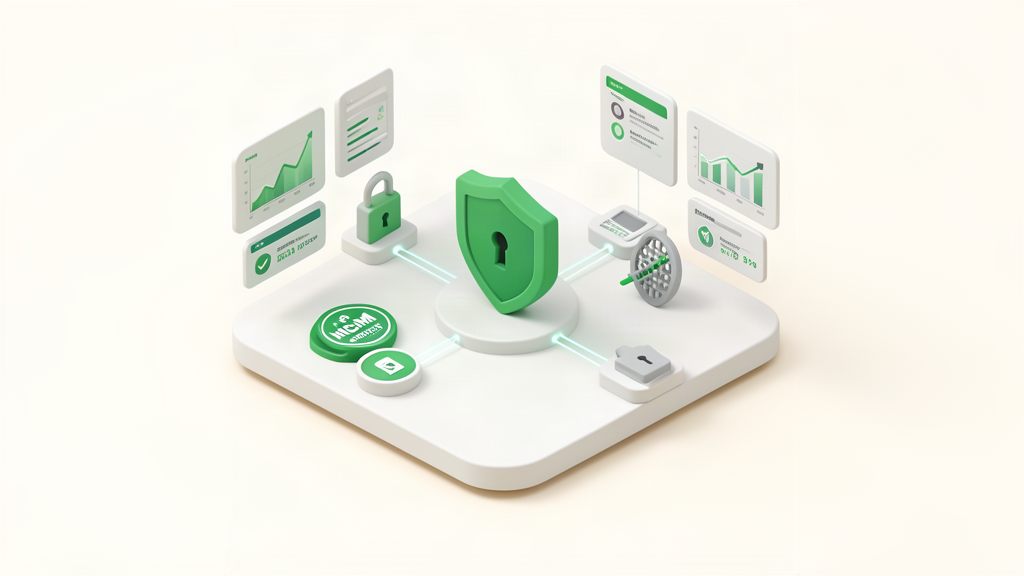
n8n Webhook Security: Why Default Configurations Leak Data
Quick Answer
n8n’s webhook node ships with authentication disabled and verbose error logging enabled by default. An unsecured webhook accepts any POST request and passes it straight into workflows that touch your CRM, database, or payment processor — and error responses from those downstream nodes can leak request context including API keys and customer data. The fix takes about 8 minutes: an authentication header check, IP whitelisting, and basic rate limiting.
Data breaches are expensive in aggregate — IBM’s 2025 Cost of a Data Breach Report puts the global average at $4.44 million per incident, down from $4.88 million the year before (IBM). That’s an industry-wide figure across all breach causes, not an n8n-specific statistic, but it’s a reasonable frame for why “I’ll secure it later” on a production webhook is a bad default.
The Attack Surface
n8n webhooks combine three properties that make them worth securing deliberately, not as an afterthought: predictable URL patterns, no authentication by default, and direct access to whatever your workflow touches downstream.
Automated scanners routinely probe for endpoints matching common patterns like https://yourdomain.com/webhook/ followed by a node ID or workflow name. Once a scanner finds a live endpoint, the next step is usually payload injection — sending malformed or unexpected data designed to trigger error responses, because those error responses often leak more than the application intended.
The attack succeeds because, unsecured, the webhook accepts any POST request and passes the payload directly into nodes that talk to your CRM, database, or payment processor.
Where the Leaks Actually Come From
n8n’s default webhook node ships with authentication disabled and, depending on your logging configuration, can capture verbose execution data. Two distinct leak paths follow from that:
Direct payload exposure. A malformed request that crashes a downstream node can return a detailed error response — and that response can include the full request context, including headers carrying API keys and customer data pulled in by earlier workflow steps.
Log file exposure. If execution data logging is left on, n8n retains full payloads and responses for every webhook call. Anyone who later gains access to your server or log management system inherits that entire history.
8-Minute Security Hardening
Three layers, roughly 8 minutes to wire up.
Step 1: Authentication Header Check (2 minutes)
Add an IF node immediately after your webhook node:
{
  "conditions": {
    "string": [
      {
        "value1": "{{ $json.headers['x-webhook-token'] }}",
        "operation": "equal",
        "value2": "{{ $vars.WEBHOOK_SECRET }}"
      }
    ]
  }
}
Generate the secret:
export WEBHOOK_SECRET="hwk_$(openssl rand -hex 32)"Step 2: IP Whitelisting (3 minutes)
A Function node before your main logic, checking the source IP against an allowed list:
// In a Function node before your main logic
const allowedIPs = ['203.0.113.0/24', '198.51.100.42'];
const clientIP = $json.headers['x-forwarded-for'] || $json.headers['x-real-ip'];

if (!allowedIPs.some(range => ipInRange(clientIP, range))) {
  throw new Error('IP not authorized');
}

function ipInRange(ip, cidr) {
  const [range, bits] = cidr.split('/');
  const mask = ~(2 ** (32 - bits) - 1);
  return (ip2long(ip) & mask) === (ip2long(range) & mask);
}

function ip2long(ip) {
  return ip.split('.').reduce((acc, octet) => (acc << 8) + parseInt(octet), 0) >>> 0;
}
Only useful if the caller has a stable, known IP range — skip this layer for webhooks receiving calls from arbitrary third parties (e.g. a payment processor’s own webhook infrastructure) and rely on the auth header instead.
Step 3: Rate Limiting (3 minutes)
A Function node backed by Redis or n8n’s in-memory store, tracking requests per source:
// Function node for rate limiting
const key = `webhook_rate_${$json.headers['x-forwarded-for']}`;
const limit = 10; // requests per minute
const window = 60; // seconds

// Check current count
const current = $memory.get(key) || { count: 0, reset: Date.now() + window * 1000 };

if (Date.now() > current.reset) {
  current.count = 1;
  current.reset = Date.now() + window * 1000;
} else if (current.count >= limit) {
  throw new Error('Rate limit exceeded');
} else {
  current.count++;
}

$memory.set(key, current);
return [{ success: true }];
Three Habits Worth Breaking
Trusting “internal network” as a security boundary. A webhook URL is public the moment it’s created, regardless of what’s behind it. Cloud load balancers expose endpoints externally, subdomain enumeration reveals internal service names, and DNS records leak infrastructure details — “it’s not public-facing” is rarely actually true for a webhook URL that’s been live for any length of time.
Leaving verbose logging on in production. Execution data with logging left on can capture full request payloads with PII, API responses containing customer data, error messages that expose your database schema, and authentication tokens from failed requests. Set the log level to errors-only in production: Settings → Log Level → Error only.
Only securing the webhook node itself. Downstream nodes leak independently of whatever protection you put on the entry point — HTTP Request nodes that log full responses, database nodes with verbose error messages, Function nodes with a stray console.log on sensitive data, Split In Batches nodes that expose processing logic in their output. Each node that touches sensitive data needs its own review, not just the webhook trigger.
Where to Start
Open your n8n instance and check the Authentication section on every active webhook node. If it shows “None,” that endpoint is accepting unauthenticated requests right now. Add the authentication header check from Step 1 to the highest-risk webhook first — the one touching payment data or PII — then work through the rest.
Related Reading
See Automation Governance for the broader discipline — credential ownership, change control, and audit logging — that webhook security is one piece of.
More Posts You'll Love
Hand-picked based on what you're reading
Why 'Successful' n8n Workflows Silently Ignore 23% of Your Webhook Data (And the HTTP Status Code Trap That's Costing You Customers)
n8n workflows show green checkmarks while dropping customer data because HTTP 202/204 codes trigger false success. Learn the 5 status codes you must handle explicitly.
Related topics: #n8n, #automation

Why n8n Workflows Crash During Your Biggest Sales Day (And the 3 Database Connection Limits That Kill Revenue)
n8n workflows crash during Black Friday traffic spikes due to database connection pool limits. Fix 3 settings to prevent $50k+ revenue loss.
Related topics: #n8n, #automation

Why n8n Workflows Consume 847% More Memory in Production (And the 3 Data Retention Settings That Prevent Server Crashes)
n8n workflows crash production servers when data retention fills memory with execution logs. Fix 3 settings to prevent 847% memory bloat during traffic spikes.
Related topics: #n8n, #automation